
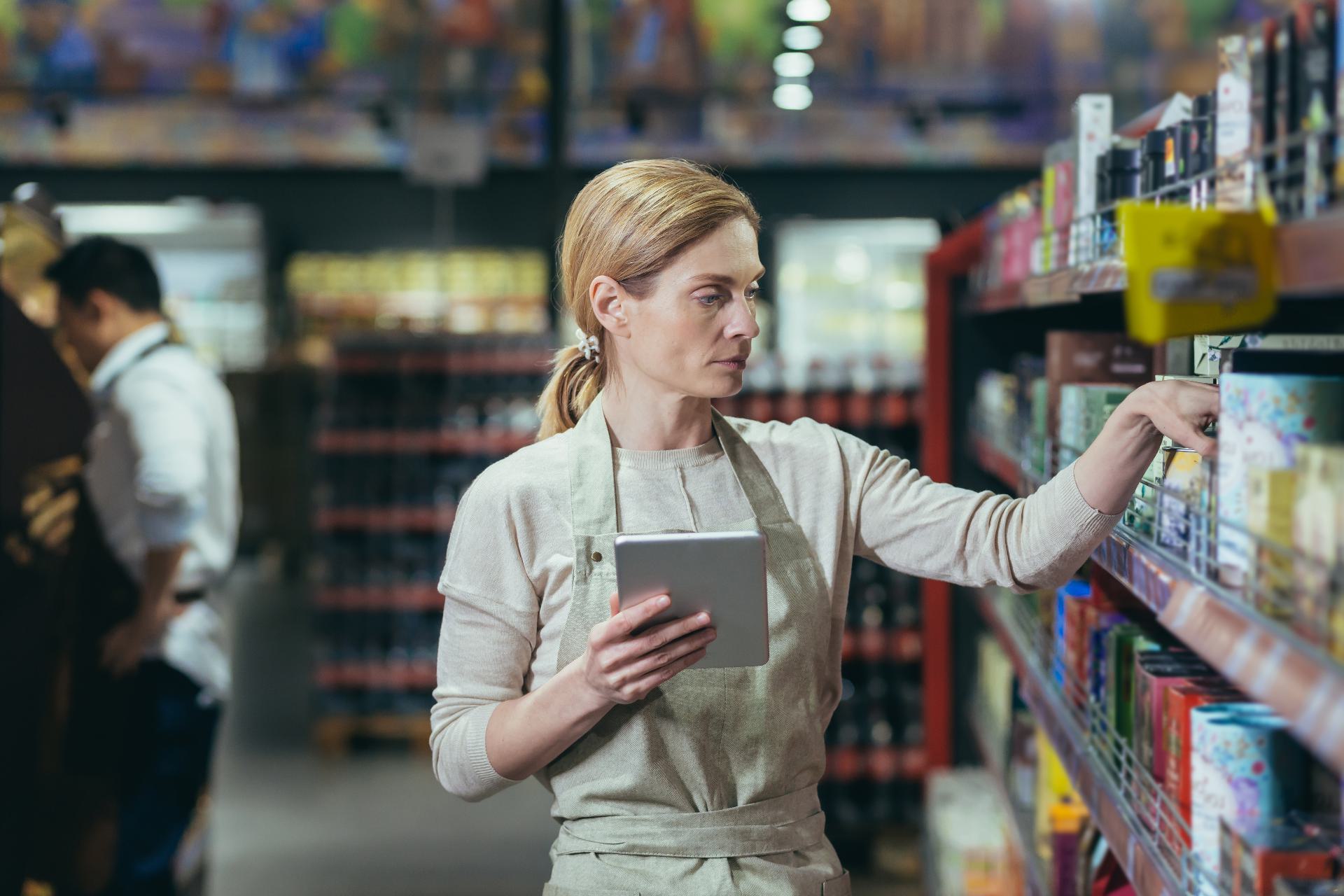
ML Use Cases in Retail That Pay for Themselves
ML Use Cases in Retail That Pay for Themselves.
Fewer stockouts on your best sellers, less markdown at end of season, and more revenue from the customers you already have. That is the result we build toward for Australian retailers and online stores. It becomes real when your sales, stock and customer data finally sit in one place AI can read, when forecasts are checked against your own history before they touch an order, and when the rules behind stock and pricing decisions are written down and improvable. We do not chase a personalisation feature that lifts clicks but not margin. Every model earns its keep against a number you can see in the books.
Book a discovery callML and generative AI use cases across retail and ecommerce
Demand forecasting by line and location
Predictive analytics that forecast demand per SKU, store and channel, accounting for promotions, seasonality and supplier lead times, so replenishment follows likely demand rather than last year's order. Less dead stock, fewer missed sales on lines that move.
Catalogue matching and enrichment
Models that deduplicate listings, match supplier feeds to your own SKUs and fill missing attributes. This is often the difference between a new range going live this week or next month, and it is the groundwork that makes every other model trustworthy.
On-site recommendations and search ranking
Recommendations and product search grounded in your own browsing and purchase history, tuned for basket value and repeat purchase rather than vanity click counts. Built on data you are entitled to use, kept inside your environment.
Generative AI for product content and service
Generative AI use cases that draft product descriptions from your attributes, answer common customer questions from your own policies, and triage support so the team handles the cases that need a person. Drafts go to a human before they reach a shopper.
Where retailers get stuck
You order by feel and last year’s numbers, so some lines sell out while others sit in the back room until they go to markdown. Customer questions pile up because answering them is manual. And the numbers that would tell you what is really happening are spread across the point-of-sale system, the website, a marketplace dashboard and a few spreadsheets that only one person understands. None of those views agree with each other, so every stock and pricing decision is a guess made under time pressure.
Retail runs on a large number of small, repeated decisions. How much of each line to order, where to send it, what to show a shopper, when to mark something down. A buying team can hold a few hundred of those in their heads. A few thousand SKUs across several channels is beyond anyone. That gap is where machine learning earns its place in this sector, and it is also why a generic tool rarely helps.
Why a tool on its own under-delivers
Buying an AI feature and switching it on assumes the hard part is the model. In retail it almost never is. The same product arrives under three supplier names, returns are recorded inconsistently, and one promotion can distort a whole season of history. Feed that to a forecasting tool and it will give you a confident number built on contradictions. The honest starting point is rarely a clever model. It is getting your sales, stock and catalogue data into a state a model can trust.
That is the first principle we work to, healthy data ecosystems, and for a retailer it means bringing sales, stock and customer records together so they finally agree. The second is AI-accessible internal data, so a model can answer real questions about your products and customers instead of plausible averages from the open web. You can read how we apply both in our approach.

How we deliver it for retail
We start with one category and prove the forecast against your current ordering method on real history before it influences a single purchase order. We make the model’s reasoning visible to your buyers, because a forecast a merchandiser does not trust is a forecast nobody uses. That is the third principle, a user-centric and result focus, tied here to stock decisions and the customer experience rather than vanity metrics.
We connect to your ERP, point-of-sale and ecommerce platform through their existing interfaces, so you do not re-platform to get started. And we write down the rules behind stock and pricing decisions in versioned form, so they are consistent across your team and you can improve them over time instead of relying on whatever one buyer remembers.
When it is the right call, and when it is not
AI in retail is worth it once the volume of decisions outstrips what your buying team can reason through by hand, and once you have enough sales history for a forecast to mean something. A growing multi-channel store with thousands of SKUs is squarely in that zone.
It is overkill if you run a single store with a few hundred lines and a spreadsheet that already does the job, where the patterns are simple enough to hold in your head. In that case a clean reorder rule beats a model every time, and we will tell you so plainly rather than sell you one you do not need. We are also candid about where ML stays a support, not a decision-maker. On price and promotion claims, a model can flag a was-or-now price that never held, but final responsibility for Australian Consumer Law fair-trading compliance stays with your team. Customer-facing features are built to the Australian Privacy Principles, with customer data kept inside your environment.
Related services and industries
See the build services behind this work in AI Agents, Automation and Data Insights, the broader Artificial Intelligence practice, and how we apply it across Retail & Ecommerce.
Read more about our Artificial Intelligence service and our work in Retail & Ecommerce sector.
Representative solutions.

The recommendations that lift basket size, a Databricks engine for an online retailer
Predicting breakdowns before they halt the line with AWS IoT and ML
Marking that keeps pace with enrolment growth, Azure OpenAI feedback for a training provider
Frequently asked.
What are the use cases of machine learning in retail?
What is generative AI in ecommerce?
Which AI tool is best for retail business?
How is predictive analytics used in retail?
Where should a mid-sized retailer start?
Find the stock decision worth modelling first
Tell us where the money leaks, whether it is overstock, stockouts, returns or messy catalogue data. We will say plainly whether AI is a sensible fit and which decision to model first.
Book a discovery call